
A synthesis from the field's most mature leaders: the deliverable-driven version of People Analytics is ending. The real debate isn't what to rename it, but what it's for.
The word "end" in the title is a little provocative, so let me say plainly what I do and do not mean by it. I do not believe that the work of People Analytics teams or the need for People Analytics teams is going away. I mean that a particular version of the field is ending, a dominant version, and one that most of us were trained in or built our careers on.
And I do not want to soften that, because something is genuinely closing. The field is also running into limits it has not had to face before, on budget, on headcount, on how much an organization is willing to invest in the work among competing priorities (read: AI). The version of People Analytics that was, in daily practice, HR numbers and reports / dashboards on workforce numbers is ending. The community, the practice, and the end-goals of this function are not.
And I am not guessing at this or making a prediction alone (although I like to think I've earned the ability to make a decent guess). Out in Chicago this past week I put a blunt version of the question, "is People Analytics ending?", to close to 100 of the field's most senior practitioners at TALREOS, the invite-only gathering where the most mature People Analytics teams meet each year under Chatham House Rule. What follows is my synthesis of those conversations, not a transcript of any of them, and the answers came back more consistent than I expected.
We have been arguing about the wrong thing

You can hear the field hunting for its footing in the language it is reaching for. We are debating whether the focus of analysis should still be headcount and humans or something closer to productivity and Agents. We are debating whether the function should be renamed at all, and into what. We are agreeing, loudly and frequently, that the "dashboard era" and "insight without action era" is over and that looking into the rearview mirror is no longer a job for humans.
There is a tell in all the energy around renaming. A field that cannot agree on what to call itself usually has not agreed on what it was for. And the truth is, we have never had a truly stable definition of People Analytics (see every long HR naming debate on LinkedIn), which is part of why a fresh label can feel like progress.
But that's not progress as a field. A name is a calling card, not a capability. You can call the function talent analytics, work analytics, workforce analytics, people intelligence, workforce intelligence, HR intelligence, human intelligence, or whatever the field tries next, and if you change nothing about whether the organization can actually act on what you know, then we're not really evolving. The energy we are spending on the "noun" of People Analytics is energy we are not spending on the harder questions underneath it.
I think most of this is downstream of a confusion we have carried for two decades. We have been arguing about our methods and deliverables when we should be arguing about our purpose.
Our deliverable in many cases was a report, a dashboard, a model, a metric created and delivered to help a decision. That is what we showed people, so that is what many people came to believed we were. But the deliverable was never the deeper reason.
The purpose, the actual reason this function exists in HR teams, is to make sure the organization is ready and able when a decision has to be made regarding the workforce.
We were the HR team members who prepared the numbers that framed that decision, who made the numbers clean and trustworthy and usable, who turned raw workforce data into something a leader could act on with confidence. We were stewards of the organization's quantitative context, working the numbers on workforce decisions. But the field was always at its core about analysis and decisions, not numbers, and the numbers are just one input rather than the whole decision.
Here is the part we under-claimed for most of the People Analytics function's tenure, but I think is more critical than ever: numbers were never the point, because numbers were only ever a slice of the context required. They were the slice that was cheap to store and cheap to move, so we built our infrastructure around them and quietly mistook that slice for the whole decision.
The rest of the organization's context, the words, the policies, the institutional memory, the reasons a job is done the way it is done, the knowledge in and about HR that lives in people and has largely not been captured, refined, or made available, despite being the larger and more decisive part of decision making. We just had no economical or computational way to capture it, let alone analyze it, so we for the most part left it out and focused on the quantitative parts as our scope of work. And that wasn't a problem at first as HR was woefully lacking in quantitative analysis. But we've shored that up now in many places and the world and technologies have kept changing around us.
Three shifts changed at once

Three shifts became true at roughly the same moment, and together they are what is making this an "ending" for an era of People Analytics.
The first is the one everyone is talking about. The numeric slice, the regressions, the dashboards, the standard analyses, the clean joins. That part is being automated by LLM tooling for analysis and SaaS providers on the data engineering side and it is being automated quickly. The computers have gotten great at preparing and executing quantitative analysis. There's still a place for People Analytics team orchestration and judgement, but a large part of the work we built our identity on is the part that commoditizes first in this AI revolution. That alone would be enough to unsettle a field.
The second is quieter and matters more. The rest of the context, the non-numeric part we always had to leave out, is for the first time captureable and machine-readable at scale. The barrier that kept words and tacit knowledge out of our infrastructure was never that they did not matter. It was that capturing them did not scale.
Until recently, you could not feasibly interview an entire organization, structure what you heard, and keep it current for more than a brief second before the organization raced ahead past your qualitative analysis findings. Now, with the right method and the right tooling, you can begin to bring qualitative methods to bear. The economics of analysis using that larger slice of organizational context just changed, and the field has not totally absorbed what that means yet for People Analytics. The part we were forced to leave out of our studies is the part that just became reachable with new AI tooling coming to market.
The third change turns this from an interesting shift into an urgent one. For the history of the HR function, the output of an analysis was a recommendation that a human then had to carry out. Insight had to travel through people, usually several of them, before anything happened in the world. We all wanted action. We just lived in a world where action was something only humans could take, and usually after other humans agreed to take it (and several VPs signed off, over several weeks, etc).
That human path from insight to action was narrow and slow, and we frankly complained about it constantly. The good work we did in PA with our heads down that no one acted on once delivered. The report that didn't get traction or make a difference. But that narrow path through a chain of humans was also doing something we never gave it credit for. It was absorbing the cost of thin context. When the context behind a recommendation was incomplete, a human in the loop augmented it, softened it, questioned it, sat on it, or quietly declined to act. Bad context produced, at worst, a bad slide. Then the human buffer caught it and corrected for it.
AI-powered agents circumvent that thin context buffer of other humans. When action becomes available by code, the constraint stops being whether you can convince a person and whether they will follow through. The constraint becomes whether the context is good enough that the action is correct, because the action is now going to happen at machine speed and before anyone in the room can catch it. That context buffer of other humans used to avoid a "good on paper, bad in practice" recommendation from the analytics team. When we remove that buffer, the responsibility of getting the context right, in the hands of agents, is more critical than ever before.
So the field's oldest and most tolerated weakness, the context we never fully captured in our quantitative systems, the parts that never made it into the database, becomes the field's most acute risk and a massive opportunity. And that is the burning platform. Looking beyond just the quantitative data, elevates People Analytics into a function that curates organizational context for decisions and actions. That's our future as a field.
Agents do not fail for the reason people think
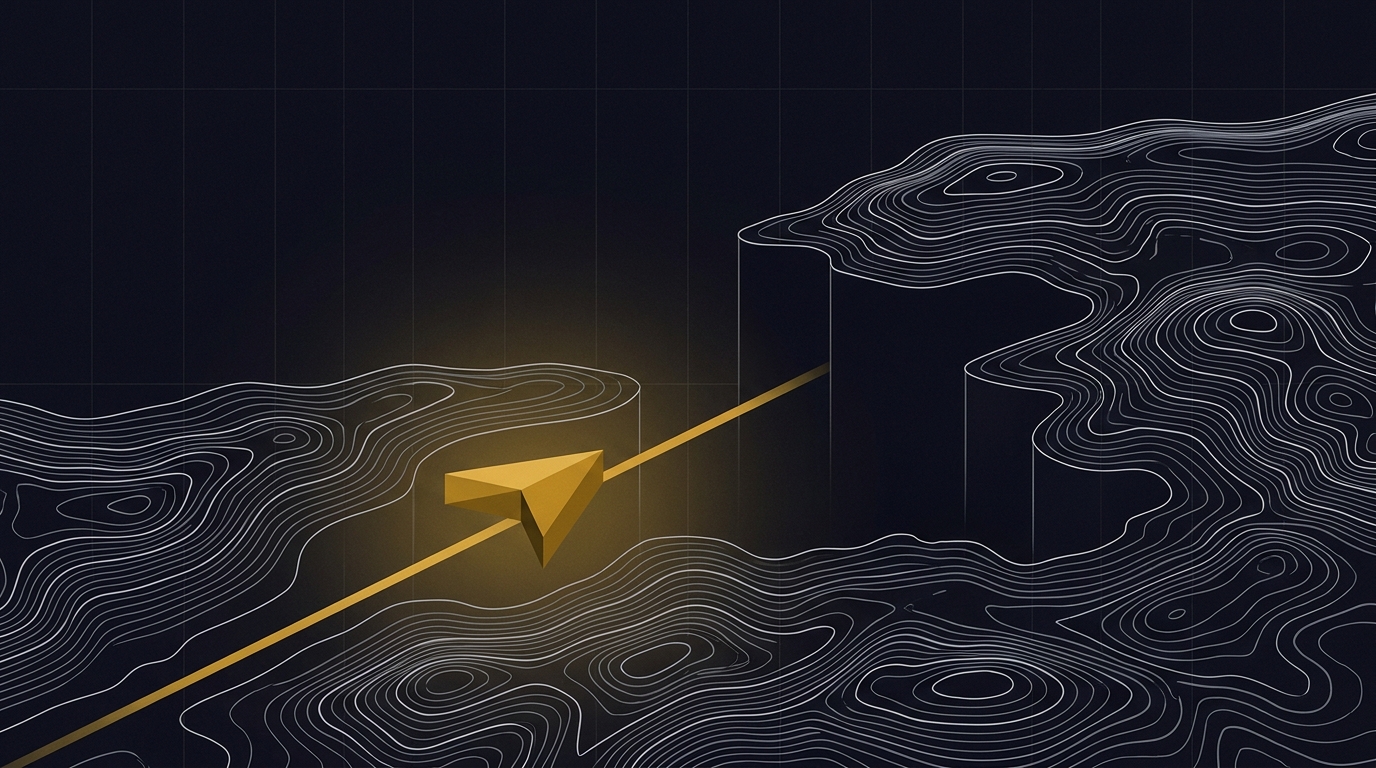
There is good evidence for this if you look outside HR. Enterprise AI is failing at a remarkable rate. The reporting on this area puts the share of corporate AI projects that fail well above 80 percent, and we're hearing constantly from "doomer" groups who now expect a large fraction of agentic projects to be cancelled within a couple of years. The reflex is to blame the models, but the models are not the problem.
The problem is that the frontier lab AI Models have no understanding of the tacit knowledge of the organization they are being asked to act inside. Ikona CEO Ian O'Keefe put a sharper edge on this last week, calling it HR's hidden data deficit: a function rich in system data and nearly empty on the knowledge that describes how the work actually gets done, which is the exact context an agent needs and cannot find in the stack.
A system of record can tell an agent what happened in the system. It cannot today tell the agent why the pay bands are shaped the way they are, which is a story one compensation leader carries in her head about a deal made in a room in 2019. It cannot tell the agent which integration will quietly break if the benefits module is migrated, which lives nowhere except in the HRIS manager who has watched it break before. It cannot tell the agent that the entire workforce plan rests on one analyst's spreadsheet, a dependency that no org chart will ever show.
None of that is in the system data. All of it is organizational context. And an agent handed the quantitative facts without the context will act, confidently and wrongly, at scale, on exactly the areas the organization most needs it to get right.
This is the cybernetic version of the same point, and I will keep it to a sentence because the idea matters more than the vocabulary: a system that acts on the world is only ever as good as its model of the world, and that model has to carry enough of the real variety of the organization, including the parts that never fit neatly into a field, or the action it takes will not hold. The workforce context layer is that model. Someone has to own it. We, the practitioners of People Analytics, are the group trained to lean in on this next phase.
It helps to be concrete about what owning that context means, because it is not a metaphor. The workforce context layer that is being rapidly shaped in organizations today is a living model of how the organization really works and what it knows about itself. Not only its data, but its operating logic, its real dependencies, its decisions and the reasons behind them, and the know-how carried by the people who quietly keep the operation running.
Curating that layer means naming and documenting what is actually true, not what the policy says is true. It means keeping the model current as the organization changes, because a model that drifts out of sync with the system is worse than no model at all. And it means holding it to a standard of trust high enough that a person, or now an agent, can act on it without pausing to check the answers with "Bob from Payroll" who has been here for 20 years. That is a real discipline, and it sits closer to the original craft of the field than to anything on a dashboard.
The bar just changed
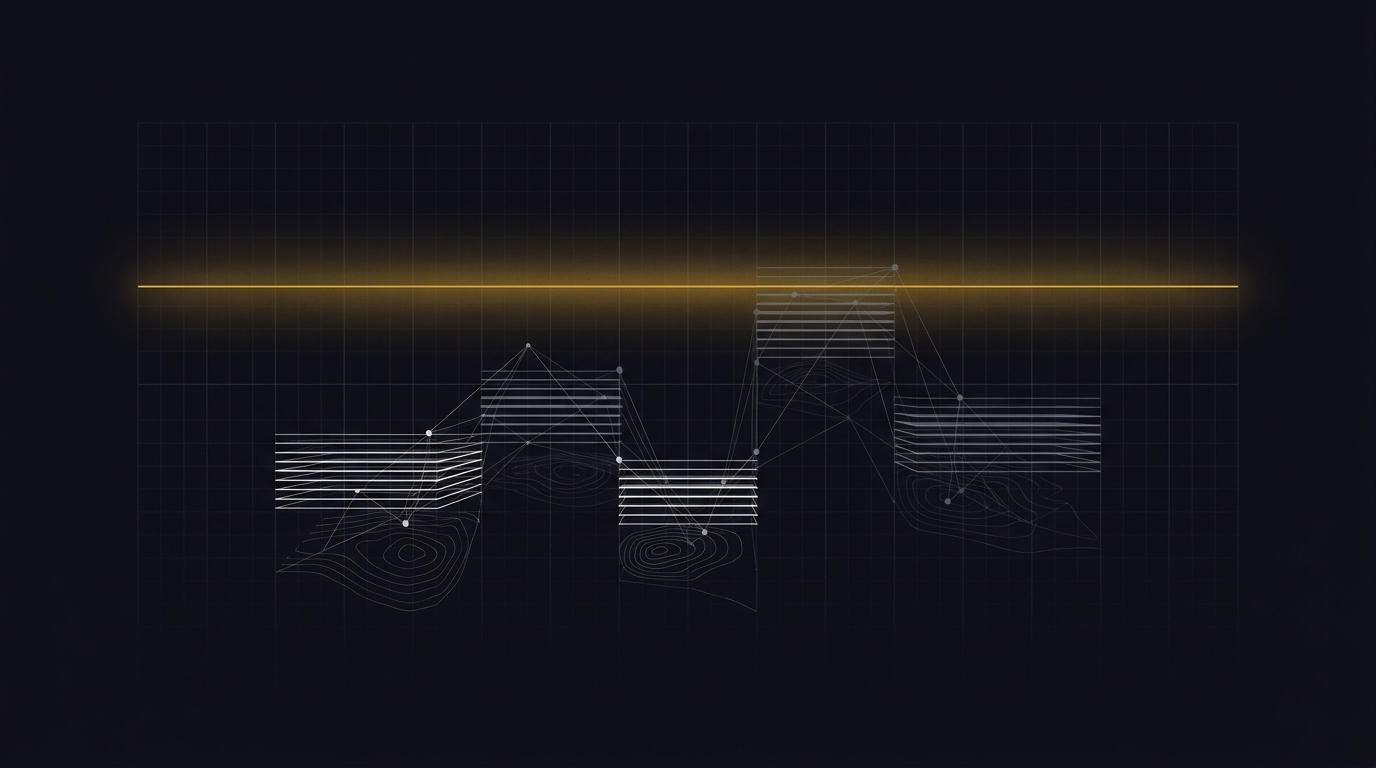
If that is right, then the question a People Analytics team should be asking itself is no longer the one we were trained to ask. The trained question we had focus on before is whether the analysis was rigorous. The real question now is whether the context is prepared enough and strong enough that it can be acted on without us in the room. That is a harder bar and a more honest one, and most teams would not clear it yet. The distance between those two questions is the work for the next several years.
It also quietly resolves a problem the field has been chasing for a generation. We have spent a long time trying to earn a seat at the table by being more rigorous with our numbers, and the seat never quite arrived, or arrived and then receded. It's time to admit that the seat was never going to come from better numbers alone.
It comes from curating and developing the organizational context layer for the workforce that everyone else will now depend on. Finance needs a real model of the workforce the moment it tries to plan capacity or model a reduction, and it will get the human element wrong if it works from headcount alone. IT needs it the moment it tries to automate a process it does not actually understand. The agents need it most of all. When the context layer is the fuel every other function's decisions and every agent's actions run on, owning it is not a seat that gets granted. It is a position that is structural.
What is actually ending

So, the end of People Analytics.
The field is moving through the same arc that most crafts have moved through before. There was an artisan era for HR, all apprenticeship and feel and judgment, doing its best with no data and no machinery. There was the analytics era, modernism at its best, focused on rigor and measurement and structure, bringing order to the chaos and, in the process, convincing ourselves that order was the whole job. What comes next has to carry both, post-modern, because the choice between data or human context and judgement was always false. Human, empathetic, and nerdy.
The version that is ending is the one that mistook the numbers for the purpose of our work. And for the most part it is not being killed off, and it is not being rebottled under a cleverer name. It is being clarified. Strip away the part that was the white-glove quantitative service team, and you are left with the part that was meaningful to us the whole time: the context underneath the dashboard, the rigor in curating a common and trusted understanding of the organization, and the judgment it takes to read it and to decide what the organization actually knows about itself.
I will grant the skeptics some space, because the skeptics in this field are usually the ones keeping it honest. People, processes, and systems do not change as fast as a conference makes it feel. Most organizations will move slowly in this new world, and slow movement is survivable for a while, but it is not survival guaranteed. The companies acting now are pulling ahead, I'm seeing it across clients and conversations with the market, and the ones treating this as one more cycle of hype will not get a dramatic death. They will simply fade in importance, slowly, over the next decade.
I'll also admit that the field may also need a name for what we evolve into. Of all the labels we are trying on, the one I expect to win, and the one I heard most this year at TALREOS, is Workforce Intelligence. I expect both People Analytics teams and Workforce Systems Leaders (teams overseeing Strategy, Ops, Tech, Data, Analytics, and AI) to rebrand in that direction over the next year, not as a marketing exercise but as a description that finally fits the broader purpose, as they take on more AI and agentic work, more knowledge management, and the data foundations all of it depends on.
People Analytics named the methods and deliverables, the analysis of people data. Workforce intelligence names the purpose, the workforce and the intelligence an organization needs to act on it, people and agents included. A name still only earns itself when the work underneath it is real, which is the part where I actually want to see a meaningful shift.
So here is what I think we keep. The work in front of us is not to find a better name. It is to get serious about the context we spent two decades leaving out, to capture the words and the knowledge and the reasons alongside the numbers, and to keep that map of the organization live and trustworthy enough that the organization can finally act on it. The numbers were never the whole of it. The context that the numbers brought forward was what was critical. And for the first time in the history of HR, the context can be expanded with qualitative work and applied to action. The only question left is who the organization will trust to curate it.
The wider conversation
This essay is one voice in a debate the whole field is having right now, and the other voices are worth reading next. I will keep this list current as the conversation develops:
Cole Napper, People Intelligence Manifesto , on HR's intelligence functions collapsing into one AI-native practice.
Colby Kennedy Nesbitt and Yuyan Sun, People Analytics Is in a Midlife Crisis, on productive capacity as a new unit of analysis.
Craig Starbuck, The Assumptions Behind People Analytics No Longer Stand , a case for workforce intelligence.
Paul Rubenstein, TALREOS 2026: The Future of HR Is Workforce Intelligence , a debrief and recap on TALREOS
I want to collect more articles talking through this moment for the field. If you've written one or if you spot one in the wild, please email me at richard@ikonaanalytics.com and I will add it here. Thanks for reading!
Written by
Richard Rosenow
Richard Rosenow is Co-Founder and Chief Product Officer of Ikona Analytics, where he owns the ISD (Ikona Systems Diagnostic) methodology, client delivery, and product. He started as an HR business partner at Citi and spent 15 years in People Analytics at GE, Meta, Uber, Nike, and Argo AI, then as VP of People Analytics Strategy at One Model. He created the Workforce Systems Leader and People Data Supply Chain frameworks, and is an HR Tech 100 honoree.
Learn more about our team