| Last Week in HR AI: Issue #3 | Week of July 13, 2026 |
The AI adoption gap: it's not the tech, it's the wiring
NHS proved the ROI. Meta stalled anyway. The difference is readiness.
|
1 hcamag.com2 uctoday.com3 hrsea.economictimes.indiatimes.com4 peoplematters.in
Ikona's Take on the past week (July 13, 2026) in HR + AI
|
IO
|
Ian O'Keefe
Co-founder & CEO, Ikona Analytics
|
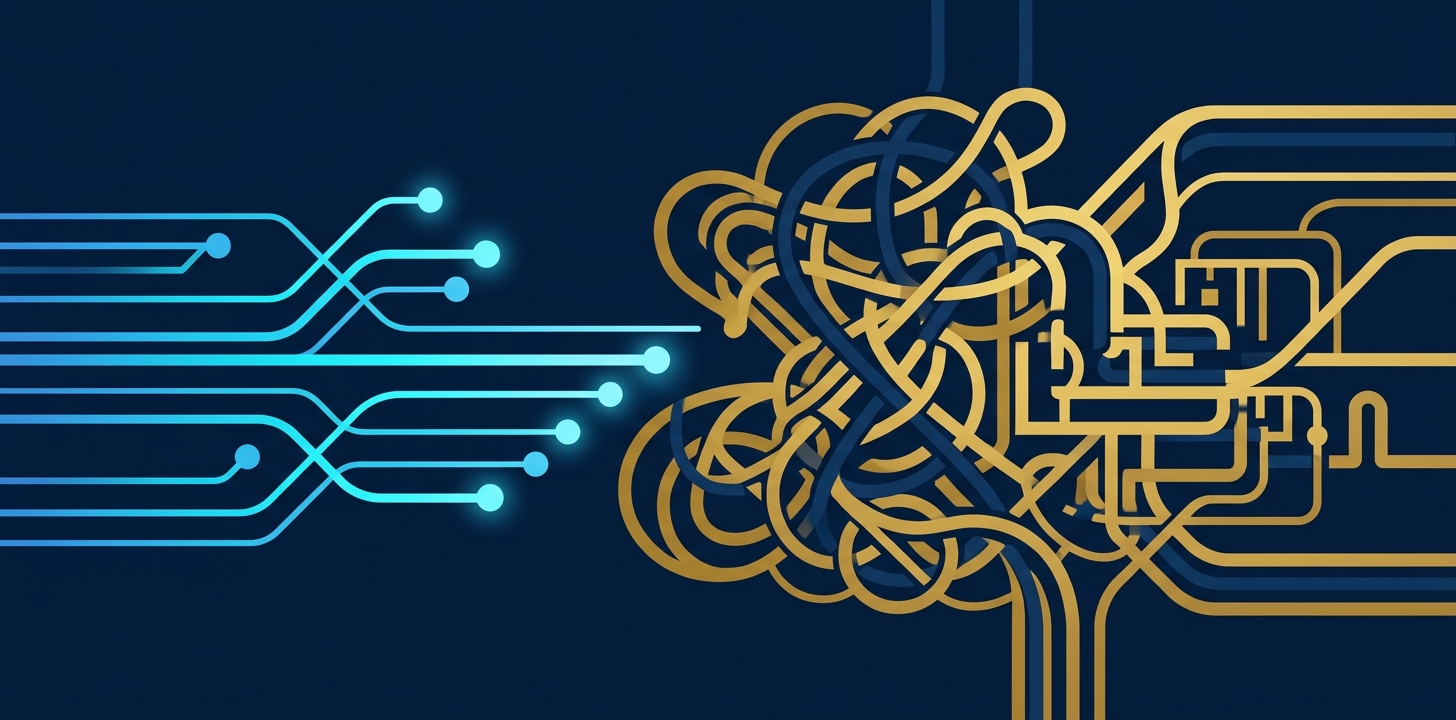
This week's through-line: the same AI capability is producing opposite outcomes, and the delta isn't the technology, it's whether the organization built the wiring to absorb it. Mark Zuckerberg told staff that agentic AI progress has stalled despite $145 billion in spend. Sapient Insights Group's Stacey Harris has the data behind why: only 4% of firms had full HR agents live last year, and the ones who skipped workflow redesign before deploying AI got worse business outcomes, not better ones. Meanwhile, NHS England's £10 billion rollout across 1.3 million staff shows what it looks like when adoption is engineered rather than assumed: nearly 25% more patient time from ambient voice tools, 47 minutes saved per shift, and roughly two admin days a month recovered by 500,000-plus Copilot users. Same technology category. Wildly different returns.
Here's the opportunity we see in that gap. Mercer's Global Talent Trends 2026 report found only 8% of executives see HR as strategically embedded in the business, even as 99% expect AI to shrink roles and confidence in human-machine readiness falls from 65% to 51% since 2024. Mercer's answer is that HR needs to become the workforce architect. We'd go further: that architecture work, mapping where people, process, and technology actually connect, is the difference between SAP's story of net job growth through redeployment and the quieter failure mode showing up in the data this week: 'botsitting,' where employees spend 6.4 hours a week correcting AI output, and an effort recession that grows even as the tools get better. Deploy agents onto broken process and you don't get productivity. You get supervision overhead with a better interface.
If any of this is showing up in your own rollout, whether it's stalled agent adoption, struggling to influence deployment priorities, or your teams quietly babysitting bot outputs, we'd genuinely like to hear what you're seeing. Reply and tell us, or reach out if you want to dig into the diagnostic behind it.
| The six to read | The stories that matter for the Office of HR — with our take on each. |
Meta CEO Mark Zuckerberg reportedly told staff that progress on agentic AI has stalled, despite the company committing $145 billion to AI infrastructure and cutting workforce along the way. Sapient Insights Group's Stacey Harris says the stall is predictable: her survey data show only 4% of firms had full HR agents live last year. She argues that companies which deployed AI without first standardizing their processes saw worse business outcomes, not better ones.
UC Today reports on NHS England's £10 billion AI rollout across 1.3 million staff, calling it one of the most credible large-scale workforce automation data sets available. Ambient voice tools reportedly gave clinicians nearly 25% more patient time and saved 47 minutes per shift in one hospital pilot, while more than 500,000 staff using Microsoft Copilot recovered roughly two days of admin work per month. The piece argues the binding constraint is adoption, not the underlying technology.
Mercer's Global Talent Trends 2026 report, based on nearly 12,000 respondents across 16 markets, finds that 99% of executives expect AI to shrink some roles while 54% cite talent scarcity as their top external risk. Confidence in human-machine readiness dropped from 65% to 51% since 2024, and employee thriving hit a record low of 44%. Only 8% of executives see HR as strategically embedded in the business, prompting Mercer to call for HR to act as a workforce architect.
Also covered by: Entry-Level Work Remains Essential: 94% of HR Leaders Expect AI to Create New Entry-Level Roles, Cognizant and Pearson Study Reveals, AI's Impact on Workplace Dynamics: Half of Employees Report Worsening Work Conditions, ETHRWorldEMEA
|
From Ikona
Can you show how work actually flows through your HR function?
We diagnose how work and knowledge really move through an HR organization, then capture the judgment that lives in people's heads so an AI system has something solid to stand on. Get in touch → |
The article describes two emerging workplace patterns tied to AI adoption. "Botsitting" refers to employees spending an average of 6.4 hours a week correcting and supervising AI output, even as the tools save time elsewhere, based on a Glean survey of 6,000 workers. "Effort recession" describes a measurable decline in discretionary effort despite improving workplace experience, drawing on Great Place To Work India data covering 5.7 million employees; both are linked to trust gaps, Gen Z expectations, and unclear metrics for AI success.
SAP says it is trying to redeploy workers rather than replace them as AI agents take on coding, patent, and support tasks, according to reporting in The Seattle Times. Despite cutting nearly 10,000 roles two years ago, the company reports net job growth since 2023 through new positions such as AI-focused engineering roles. Economists cited in the piece see AI as a possible offset to Europe's aging workforce, while skeptics point to SAP's reliance on U.S. AI models and its falling stock price.
HBR research from Jim Doucette and Vishal Gaur examines how generative AI is raising, not lowering, the skill bar employers expect from new knowledge-worker hires across three high-recruiting sectors. The piece includes an anecdote from a bank executive describing a department that went from no gen AI use to near-universal daily use within three years. The full study is behind HBR's paywall.
This paper argues that the caution many CHROs feel about delaying AI investment is not risk-free: it carries four compounding costs, including tenured knowledge walking out the door, unchecked shadow AI architectures, vendor deals made against an unknown current state, and foundation work that only gets more expensive over time. It challenges the assumption that 'revisit in 2027' is actually the safe choice.
The pattern this week is clear enough to act on: AI model capability is no longer the constraint, organizational readiness is. Mercer's call for HR to become the "workforce architect" is the right instinct, and the firms proving it out this week, most visibly the NHS, are the ones who built the connective tissue before they scaled the tool. The counterexample sits in the same issue: 6.4 hours a week spent correcting AI output is what deploying onto unredesigned process actually costs. Ask your team how many of those hours they are already absorbing.
If your team is wrestling with workforce intelligence, AI readiness, or a transformation that has to land, we'd love to help. Reach out and tell us what you're working on.
Get in touch →Last Week in HR AI
Practitioner perspectives and diagnostic frameworks, delivered the week they publish. Be the first to know when new research drops.
No spam, ever. Unsubscribe anytime.